
Samurai Shodown Circuit 2026
Introducing the Samurai Shodown League 2026 — a season‑long circuit designed to reward consistency, community engagement, and high‑level competition. Whether you’re a seasoned warrior or sharpening your blade for the first time, this league gives every player a path to the top.
The journey runs February 2026 through December 2026, ending in a high‑stakes Round Robin Grand Finale where one champion will stand above all.
Sharpen your blade. Steady your spirit. Embrace Death.
Season Structure
Held over a 10- month stretch, the circuit is structured around a series of exhibitions, weekly lobbies, monthly tournaments, interviews, and panel discussions. The Grand Finale will be presented throughout December, as a Round Robin series of exhibitions showcasing the Top Samurai Shodown talent with special interviews that offer players an opportunity to tell the world their compelling stories.
Participants will be added throughout the League Season and will be featured on the Leaderboard to showcase their achievements, accompanied by live stream broadcasts with detailed narratives that provide context and deeper insight into the historical significance of the XBF North American SamSho scene. These players were drawn to XBF weekly online lobbies and monthly online tournaments, and emerged as EVO, Combo Breaker, Frosty Faustings, SmashFactor, and VegasClimax Champions! Seasoned veterans, as well as emerging talents, the League ensures a blend of both teacher and student perspectives and playstyles.
About Us
The Samurai Shodown League is organized by Ke11y Ann and presented by ThrustyZol productions, in association with XBF. This League recognizes ThrustyZol for seven years of dedication to the scene, and for encouraging the online Samurai Shodown Tournament Community to return to offlines in 2022 following global shutdown. The Legion of the Samurai Club on Xbox was founded in 2019 by Thrust Jonson aka ThrustyZol, and he has been providing quality Samurai Shodown streams and weekly SamSho events (online and offline) to the public ever since.
Frequently Asked Questions
Who is ThrustyZol? Who is Thrust Jonson?
ThrustyZol is a top Community Leader and Contributor for Samurai Shodown events in America and appears on the public Leaderboard to recognize his commitment and total earned points. To keep hosting and competition roles separate, any Lobby hosting points accumulated by ThrustyZol will be excluded from Final Championship qualification even if the point total would place them in the Top 8. This ensures fair competition while still recognizing their vast community contributions. Thrust Jonson is their original gamer tag on Xbox.
Is the Samurai Shodown Leage open to all regions?
Players located in regions outside the America’s will appear on the public Leaderboard to recognize their total earned lobby points, however, at this time, farther regions are not eligible to participate in the Final Championship bracket. This rule may change if SNK reinstates the 120fps delay-based netcode that allowed for good, stable, long-distance online connections.
Why is the League only offered on Xbox Series?
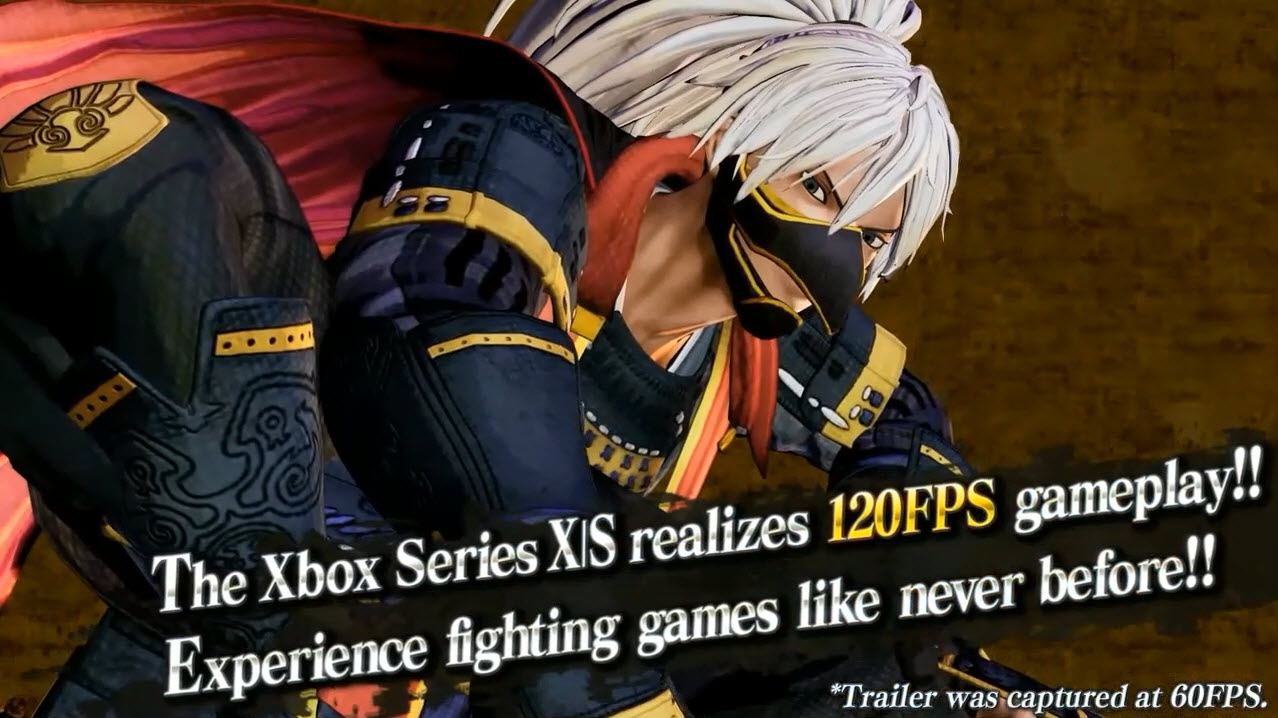
Xbox One was where weekly Casual Fight Friday Lobbies and monthly Tournaments such as ‘Not So Casual Fight Friday’ and ‘Donkey Soda’ originated, established in 2019. In 2021, SNK released an enhanced version exclusive to Xbox Series with 120fps gameplay, which uniquely benefited from exceptional netcode, drastic input delay reductions, with a faster, incredibly reliable response. Players traveling to compete at majors unanimously agreed X|S felt significantly more responsive when compared to PS at Evo 2022. After a public poll resulted in the Xbox Series being heavily favored for competitive gaming, Xbox became the standard Tournament platform in the Americas, with past major events ultimately leading to a dedicated Tournament Scene in America held every year on Xbox Series since COVID. The players in this dedicated scene went on to earn themselves a Qualifier Spot in the SWC2025, the only region of players who qualified at multiple events.
The XBF Discord is where you’ll find lead organizers and top players who have traveled across the world to attend SamSho at major FGC Tournaments since its release. XBF is a pleasant Fighting Game Community with a dedicated channel to Samurai Shodown. The discord has proven invaluable to active players seeking games and insight, and provides a vast amount of Samurai Shodown information including discussions, matchmaking, upcoming events, live streams, open lobbies, and offers this with no-nonsense.
When will the PS and Steam versions get the 120fps gameplay upgrade? Does Samurai Shodown have rollback? and Why doesn’t this game have cross-play?
This exquisite compilation of questions showcases a popular array of inquiries that captures the essence of why Samurai Shodown players on Xbox Series are leaders of the tournament scene for the last 5 years. Many of the original Samurai Shodown players from 2019 did not keep up with the game following the announcement of COVID. The common arguments came from owners of the 60fps game versions, stating the game was unplayable online or inputs felt sluggish and ultimately demanded rollback.
However, what these players don’t know is that the 120fps game version on the Xbox Series corrected the netcode, the game was playable online from USA to Japan, to Sweden, to France, to Argentina, to Costa Rica, and to Brazil. Those who tried it know this to be true and beg for that version to be reinstated. While rollback did release on PlayStation, Steam, and Xbox Series, it was poorly implemented and the 120fps delay-based netcode was far superior to any version with rollback. My greatest wish is that those who never got to experience it, someday will.
Crossplay is not ideal between the different versions because their environments are different, some environments cannot handle the increased framerate or higher hertz refresh rate. And while crossplay sounds great on paper, degrading a unique and superior version of the game to add crossplay will unlock a plethora of new issues. The best option if you love the game, is to buy all the versions and see which one works best for your needs.
Got questions?
Feel free to reach out.
Samurai Shodown’s Series X|S version runs at 120 FPS and reviewers specifically report that gameplay feels more responsive at 120fps. Community tournament material also explicitly describes the Series version as providing 120 input opportunities per second.
Why 120Hz better reflects player ability:
For competitive Samurai Shodown, 120fps with a 120Hz gameplay-input timer provides a more accurate measurement of player skill than 60fps with a 60Hz input timer because it reduces the amount of time that the game must quantize into a single input interval. The rules of the interaction do not need to become easier. Instead, the game can distinguish player decisions with greater temporal precision.
At 60Hz, one input interval represents approximately:
16.67 milliseconds
At 120Hz:
8.33 milliseconds
So the important competitive difference is:
If inputs are evaluated at 120Hz, the game gets twice as many temporal opportunities per second to distinguish when the player acted.
That distinction is fundamental to competitive integrity.
The Ukyo vs. Amakusa interaction at the Brook Fighter West Coast Clash Tournament on October 17, 2026 demonstrates why.
Suppose Amakusa performs a light attack against Ukyo.
Ukyo waits until extremely late in the attack and successfully performs Deflect.
Now suppose Ukyo immediately attempts SSM.
The result depends upon several extremely small timing relationships:
Amakusa attacks → Ukyo deflects → Amakusa enters the applicable recovery/deflect state → Ukyo initiates SSM → SSM reaches Amakusa → Amakusa becomes capable of guarding
And distance matters because Ukyo’s SSM must travel farther before connecting if the characters are separated.
Consequently, there can theoretically be a boundary where:
Ukyo executes slightly earlier → SSM connects
but:
Ukyo executes slightly later → Amakusa recovers and blocks
That boundary is exactly where 120Hz becomes competitively significant.
The “missing moment” problem at 60Hz!
Here’s an easy visualization for you:
60Hz input timer
1 0 ms 16.67 ms
2
3 |——————————-|
4 Input check Input check
The game has one interval covering that entire 16.67 ms period.
Now compare 120Hz:
120Hz input timer
1 0 ms 8.33 ms 16.67 ms
2
3 |—————|—————|
4 Input check Input check Input check
There is now an additional opportunity halfway between the two 60Hz boundaries.
That’s the heart of the competitive integrity argument.
Suppose the competitively meaningful moment happens around that middle point.
1 60Hz
2
3 A ——————————- B
4 ↑
5 PLAYER ACTS HERE
6
7 120Hz
8
9 A ————— X ————— B
10 ↑
11 PLAYER ACTS HERE
120Hz has a timing boundary much closer to the player’s actual action.
60Hz does not.
The player’s physical action still happened. But a 60Hz timing system necessarily has coarser temporal resolution with which to classify it.
Why that’s a competitive-integrity issue:
120Hz allows the game to measure difficult techniques more precisely.
Imagine two players reacting 8.33 ms apart.
Under a 120Hz input timeline, that difference is the duration of an entire input interval.
Under a 60Hz timeline, both actions may fall inside the same 16.67 ms interval.
Therefore, if the engine actually evaluates the relevant input/gameplay state at 120Hz, it has finer temporal resolution for distinguishing those actions.
And that’s exactly what competitive systems should seek to do:
Different player execution should be distinguishable whenever the game’s intended rules permit that distinction.
Let’s bring it back to the late Deflect scenario, as
this is an interaction where 120Hz becomes particularly persuasive.
A late Deflect represents the player deliberately waiting much closer to the end of the opponent’s offensive action.
Early Deflect
The player successfully recognizes the attack and responds with substantial timing margin.
Late Deflect
The player waits closer to the boundary between:
successful defensive action
and
being too late.
The second interaction therefore puts considerably more importance on precise temporal measurement.
Now add the light-attack example.
Because Amakusa’s light attack recovers relatively quickly in this scenario, Ukyo cannot necessarily treat every successful Deflect as a guaranteed SSM from every distance.
Instead:
1 AMAKUSA
2 Light attack
3 ↓
4 UKYO
5 Late Deflect
6 ↓
7 UKYO
8 Immediate SSM
9 ↓
10 ├── Close enough → SSM reaches Amakusa before guard
11 │
12 └── Farther away → travel consumes additional time
13 ↓
14 Amakusa recovers
15 ↓
16 Amakusa blocks
Now we have a very small temporal boundary between two dramatically different competitive outcomes.
That’s exactly the kind of interaction for which additional temporal resolution matters most.
The key philosophical argument
Competitive integrity does not mean making every version of a game equally coarse. It means allowing the game to distinguish player decisions as accurately as the intended game logic allows. If Samurai Shodown evaluates gameplay inputs at 120Hz, then restricting competition to a 60Hz input timeline does not make the game more faithful merely because 60fps was historically common in fighting games. It gives the game fewer temporal opportunities to recognize when a competitor acted. At 120Hz, each input interval is approximately 8.33 milliseconds instead of 16.67 milliseconds. That does not inherently enlarge a legal Deflect window or make an illegal input legal. Rather, it provides finer temporal resolution for determining where the player’s input falls relative to that window.
The competitive advantage should therefore come from the player’s timing, decision-making, spacing and execution, not from the coarseness of the timer used to measure those abilities.
A good analogy would be this:
Think of measuring a sprint.
Imagine one stopwatch measures only to:
0.1 seconds
and another measures to:
0.01 seconds.
Two runners can receive the same displayed result from the coarse stopwatch even though one actually finished sooner.
The finer stopwatch didn’t make either person run faster.
It didn’t change the finish line.
It didn’t change the distance.
It measured their performance more precisely.
The 120fps vs 60fps argument is that 120Hz serves a similar function for sufficiently timing-sensitive gameplay:
It isn’t granting skill. It’s measuring execution at finer temporal resolution.
That analogy is meant to explain this concept in a way that is much easier for someone unfamiliar with fighting games to understand.
If everyone plays at 60fps, is that still fair?
It can be equal without being maximally accurate.
If everyone plays under the same 60Hz conditions, there can certainly be procedural equality. Everybody receives the same limitation.
But that’s different from asking which environment is the better measurement of player ability.
To demonstrate that distinction with an absurdly simple analogy:
Giving every runner the same crude stopwatch is equal treatment. It doesn’t make the crude stopwatch the most accurate instrument.
If the game’s supported 120Hz implementation can distinguish legitimate timing differences that a 60Hz implementation cannot distinguish as finely, then 120Hz is the more temporally precise competitive instrument.
If, as demonstrated by testing, Samurai Shodown’s 120fps version evaluates gameplay-relevant inputs at 120Hz…
The purpose of competitive Samurai Shodown should be to determine which player makes the better decisions and executes them with greater precision. A 60Hz input timer divides one second of competition into approximately 16.67-millisecond intervals. A 120Hz timer reduces those intervals to approximately 8.33 milliseconds. In interactions such as Ukyo’s last-moment Deflect against Amakusa’s quickly recovering light attack, followed immediately by an SSM whose punish viability can depend on distance and timing, those smaller intervals matter. If the 120Hz implementation evaluates those gameplay inputs at that finer rate, it can distinguish player actions with greater temporal accuracy. The rules do not need to become easier, the Deflect window does not need to become larger, and Ukyo does not need to receive a guaranteed punish that the game’s logic does not permit. What changes is the precision with which the game determines when the players acted. That is why 120Hz is not merely a graphical luxury. It is the more precise competitive measurement of the players’ ability to execute Samurai Shodown as the game’s 120Hz implementation allows.